
Contact
- Address:Sariyer Kirecburnu, Istanbul
- Hours:Every day 09:00 - 23:00
- Kitchen:Daily fresh fish and Turkish mezes
- View:Istanbul Bosphorus
How to Tell If Fish Is Fresh in Istanbul
Freshness is the first thing a good seafood cook thinks about and the last thing a diner should have to guess about. In Istanbul, where the Bosphorus narrows and widens between two continents, the daily catch moves quickly from boat to counter to grill — but not every establishment treats that timeline with the same respect. Knowing how to tell if fish is fresh in Istanbul is genuinely useful: it changes how you order, what you ask, and where you choose to sit down for dinner.
This guide walks through the practical signs of freshness, the seasonal rhythm of Turkish waters, and the questions worth asking before you commit to a table.
Why Freshness Matters More Than Almost Anything Else
Fish is one of the few ingredients that cannot be rescued by technique. A talented grill cook can work wonders with seasoning and heat, but no kitchen can reverse the effects of time. As a fish ages, enzymes break down muscle tissue, fats oxidise, and the clean, faintly saline character of a good catch turns muddy and sharp.
Turkish seafood cuisine rests on that principle. The classic rakı-balık table — a glass of rakı, a spread of mezes, a simply grilled fish — is deliberately minimal because the fish itself is meant to carry the meal. Simplicity only works when the raw material is right.
How to Judge Freshness: What to Look For
You do not need to be a fishmonger to read the signals. Most of them are visible, and a few are obvious the moment the plate reaches the table.
The Eyes
Fresh fish have bright, clear, slightly domed eyes with a dark, well-defined pupil. As time passes, the eyes flatten, cloud over and sink into the socket. A milky or greyish eye is one of the clearest indicators that the fish has been sitting for a while.
The Gills
If the fish is displayed whole and you can lift the gill flap, look inside. Fresh gills are a clean, deep red to pinkish-red, with a slightly damp, uncoated surface. Gills that have turned brown, grey or dull, or that look sticky and clumped, are a sign of age.
The Skin, Scales and Flesh
Fresh fish skin is shiny and taut, and scales sit flat and hold on. When you press the side of the fish with a finger, the flesh should feel firm and spring back. A depression that stays in place means the muscle has already begun to soften. On the plate, the same rule applies: properly fresh fish flakes into clean, moist segments rather than collapsing into mush.
The Smell
Fresh sea fish should smell of clean sea air — subtle, cool, almost mineral. Anything ammonia-like, sour or aggressively "fishy" is the smell of decomposition, not of the sea. Freshwater fish carry a slightly different, milder aroma, but the principle is identical.
Fillets, Steaks and Shellfish
Whole fish are the easiest to read, but most diners order fillets or steaks. Here, examine colour and moisture: the cut surface should look glossy, not dry or curling at the edges. Shellfish follow their own rules — mussels and clams should be tightly closed or close when tapped, and shrimp should feel firm rather than limp.
What "Fresh" Actually Means on a Bosphorus Menu
There is an important distinction between fish that is never frozen and fish that is freshly thawed. Neither is automatically bad. In a country with a strong fishing tradition and daily markets, though, many diners come to a Bosphorus restaurant specifically expecting the day's catch, and it is fair to ask.
A useful question for any waiter: "What came in today?" A confident answer names the fish and its origin. A vague answer tells you something too.
Seasonal Fish in Istanbul: A Rough Guide
Water temperature drives the migration and fat content of fish, so the menu on a Bosphorus table changes through the year. This is not a marketing convenience — it is a practical reality of Turkish fishing.
Autumn and Winter
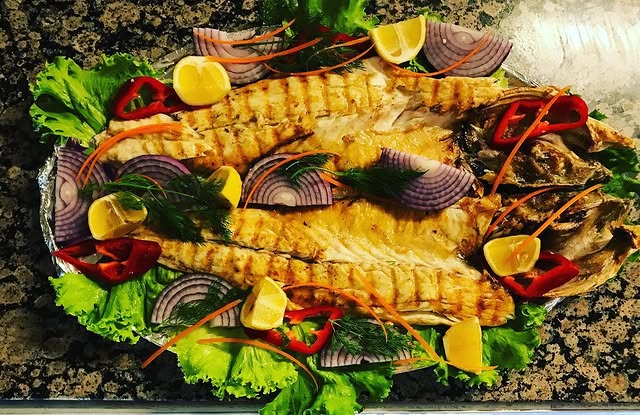
As the Bosphorus cools, the season for the most celebrated Turkish table fish begins. Lüfer arrives in autumn and is prized for its rich, oily flesh. Palamut (bonito) is another autumn favourite, often grilled or baked. Winter brings hamsi from the Black Sea, small and silver and typically fried or cooked in a pan, along with istavrit (horse mackerel) and, on the colder days, kalkan (turbot).
Spring and Summer
Warmer months favour levrek (sea bass) and çipura (sea bream), whether farmed or wild, and smaller fish such as barbun and tekir. Grilling becomes the default, and lighter mezes — leafy greens, olive oil dishes, yoghurt-based spreads — take up more of the table.
Being able to name which fish is in season is one of the simplest ways to order well.
Meze, Rakı and the Full Table
Freshness is not only about the fish. Meze culture rests on the same principle: good olive oil, properly cooked pulses, vegetables that have not been sitting too long. A kitchen that cares about the fish almost always cares about the small plates.
If a restaurant's meze counter looks tired — dried-out edges, dull colours, a chill cabinet full of identical bowls — it is reasonable to wonder about the rest of the kitchen.
How to Choose a Fish Restaurant in Istanbul
There is no single answer to "where should I eat fish in Istanbul," but there are criteria worth applying.
- Location and setting: A restaurant near the water usually has a shorter route from supplier to kitchen, and the atmosphere matches the food.
- Evidence of turnover: A busy dining room is not proof of quality, but it does suggest the fish is moving quickly.
- Clarity on the menu: Staff should be able to tell you which fish is in season, how it is cooked and where it comes from.
- Meze quality: Look at the counter before you sit down.
- Preparation: Grilled, fried or baked — the method should suit the fish, not fight it.
- Service and comfort: A relaxed meal is part of the experience, especially for a long rakı-balık evening.
- Reservation convenience: In the northern Bosphorus, popular tables fill quickly, particularly at weekends.
Kireçburnu, Sarıyer and the Northern Bosphorus
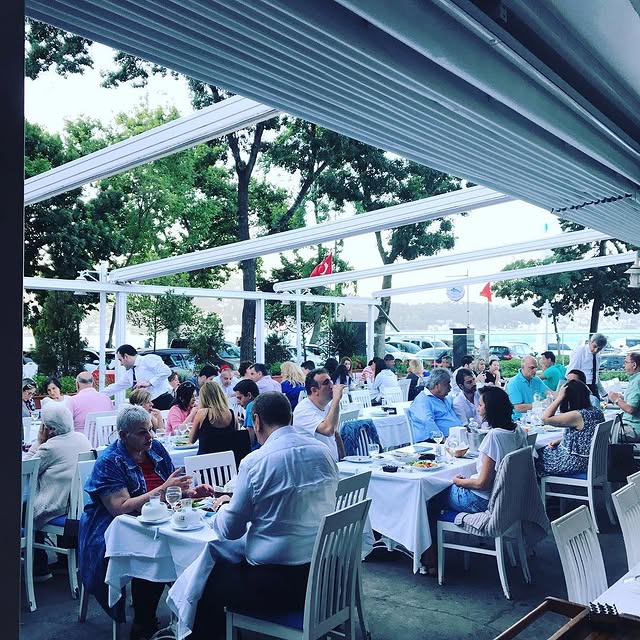
The upper Bosphorus, from Sarıyer down through Kireçburnu, has long been associated with seafood. The water is close, the pace is slower than in the city centre, and the view runs along the strait towards the Black Sea. For anyone researching where to eat fish in Sarıyer or Kireçburnu, this stretch is worth considering simply because the setting and the subject match.
A meal here is usually unhurried: mezes arrive, a fish is chosen, and the table stays for a while.
A Table With a Long Memory
Tarihi Ali Baba Balık Lokantası has been part of this coastal tradition since 1920, which means several generations of diners have applied exactly the freshness checks described in this article across its tables. Longevity in Istanbul's restaurant world is not easy to earn, and a kitchen that has kept its place in Kireçburnu for that long has had to answer the same questions every day: what came in this morning, what is in season, and how should it be cooked.
That is a useful thing for a diner to know. It does not guarantee any individual plate, but it does mean the restaurant belongs naturally in the conversation about where to eat fish on the Bosphorus.
Practical Tips Before You Order
- Ask what is in season rather than defaulting to a familiar name.
- For whole fish, ask to see it before it goes to the grill.
- Match the cooking method to the fish: oily fish for the grill or oven, small fish for frying.
- Balance the table with vegetable mezes and a couple of seafood starters.
- If you are visiting on a weekend evening in Sarıyer or Kireçburnu, reserve ahead.
- If you are visiting in autumn or winter, expect a different — and often more interesting — selection than in high summer.
Reserve your table for the freshest seafood and a tradition of taste since 1920. Contact us via WhatsApp for quick reservations with a Bosphorus view.
---
🐟 Historic Ali Baba Seafood Restaurant | 📍 Kireçburnu, Sarıyer, Istanbul | 🌐 alibababaliklokantasi.com | 📞 Reserve via WhatsApp
Frequently Asked Questions
How can I tell if fish is fresh at a restaurant table?
Look for bright, clear eyes if the fish is served whole, firm flesh that flakes cleanly, and a clean sea smell with no ammonia note. Dry edges, mushy texture and a sour odour are warning signs.
Is frozen fish always worse than fresh fish?
Not always. Modern freezing preserves quality well, and some fish are better frozen shortly after catch. What matters is honest information — you should be able to ask whether the fish is fresh or thawed and get a straight answer.
Which fish is in season in Istanbul right now?
It depends on the month. Autumn and winter bring lüfer, palamut, hamsi, istavrit and kalkan, while spring and summer favour levrek, çipura, barbun and tekir. Ask the restaurant what arrived that day.
Where can I eat fish in Sarıyer or Kireçburnu?
The northern Bosphorus has a long seafood tradition, and Kireçburnu sits directly on that shoreline. Tarihi Ali Baba Balık Lokantası, in Kireçburnu, is one option for a Bosphorus-side meal with a history dating back to 1920.
What should I order at a Bosphorus fish restaurant?
Start with a spread of mezes, choose a fish that is in season, and let the cooking method follow the fish. Grilling suits oily and medium-textured fish, while frying works well for small fish such as hamsi.
Do I need a reservation for a fish restaurant on the Bosphorus?
For weekend evenings and warm-weather months, yes — tables near the water fill quickly. Contacting the restaurant via WhatsApp ahead of your visit is the simplest way to secure a time.
10.10.2026
Featured Publications
Notes on fish season, Bosphorus tables and traditional meze culture.