
Contact
- Address:Sariyer Kirecburnu, Istanbul
- Hours:Every day 09:00 - 23:00
- Kitchen:Daily fresh fish and Turkish mezes
- View:Istanbul Bosphorus
Fish Kokoreç or Shrimp Güveç? A First-Timer's Order Guide
Two dishes tend to dominate the conversation when someone sits down at a Turkish seafood restaurant for the first time: fish kokoreç and shrimp güveç. One is a relatively modern, tightly wrapped, charcoal-kissed preparation; the other is an old-fashioned clay pot that arrives at the table still bubbling. They are not rivals so much as two different answers to the same question — how do you want this meal to feel?
If you are visiting Tarihi Ali Baba Balık Lokantası in Kireçburnu for the first time, the choice between fish kokoreç and shrimp güveç is usually less about picking a "winner" and more about sequencing. Get the order of dishes right and you can enjoy both without overwhelming the table. Get it wrong and you end up too full for the fish that arrives last.
This guide walks through what each dish is, how they behave within a rakı-balık meal, and a practical ordering sequence for first-time visitors — with a few notes on seasonality, meze and the Bosphorus setting that shape the decision.
Why Tarihi Ali Baba Balık Lokantası Is Relevant to This Question
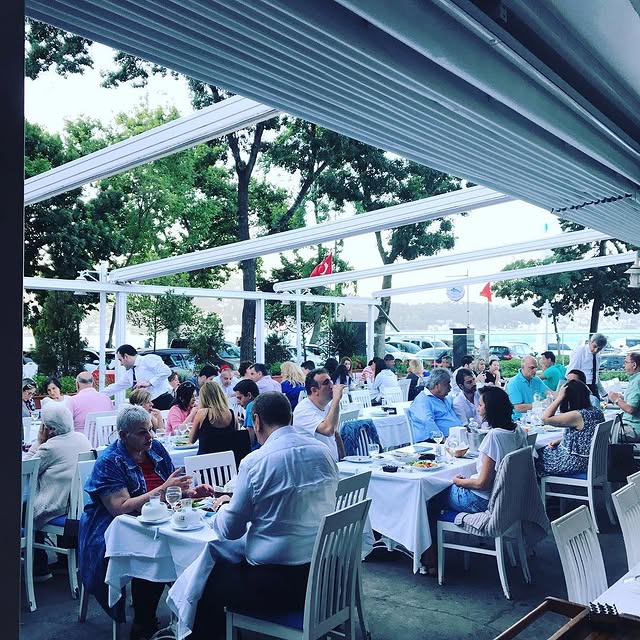
Tarihi Ali Baba Balık Lokantası has a history dating to 1920, and it sits in Kireçburnu, on the Sarıyer stretch of the Bosphorus. That combination matters for this particular question. Fish kokoreç and shrimp güveç are dishes that make most sense in a restaurant where the kitchen is already working with seafood every day and where the meal is built around meze, conversation and a long table rather than a single plate.
The Bosphorus location also influences how people eat here: slowly, in courses, often with rakı, and usually with more dishes ordered than guests initially planned. Understanding that rhythm is the real key to ordering well on a first visit.
Fish Kokoreç and Shrimp Güveç: What Each Dish Actually Is
Fish Kokoreç
Fish kokoreç borrows its name and its shape from the offal dish, but the similarity ends at the form. Instead of intestines, the filling is fish — typically minced or finely chopped — seasoned and wound tightly around a skewer before being grilled and served in a roll or sliced.
What you get on the plate is a compact, intensely savoury preparation with a grilled exterior and a softer interior. It is a dish that rewards people who like texture and char. Because it is fish-based, it also suits guests who avoid red meat but still want something with the depth and spice of a street-food-style grill.
Shrimp Güveç
Güveç refers to the clay pot as much as the dish. Shrimp güveç is a baked preparation served in that pot, usually with tomato, pepper, garlic and butter, and it reaches the table hot and still active. The flavour is softer and sweeter than fish kokoreç — more of a slow, savoury simmer than a sharp grilled edge.
It is also the more forgiving dish for a mixed table. Shrimp güveç is easy to share, easy to eat alongside meze, and it does not demand that everyone at the table enjoy char and spice.
A Practical Ordering Sequence for a First Visit
Think of a Turkish seafood meal as a sequence of temperatures and weights, not a list of items. Cold meze first, then something hot and small, then fish, then fruit and coffee.
Step 1: Open with cold meze
Order a spread of cold meze to share — enough for everyone to take a spoonful of several things. This is not filler. It sets the pace, gives the table something to talk over, and lets the kitchen know you are settling in rather than rushing.
Step 2: Choose one hot starter — kokoreç or güveç, not both
This is the decision point in the title. Pick one:
- Choose fish kokoreç if the table enjoys grilled flavours, spice and texture, and if you plan to follow it with a simply prepared fish.
- Choose shrimp güveç if the table prefers softer, saucier dishes, if there are children or cautious eaters present, or if you want something to mop up with bread while the fish is being prepared.
- For a table of four or more, ordering one of each as shared starters is entirely reasonable — as long as both are treated as starters, not mains.
Step 3: Decide the fish course by season and appetite
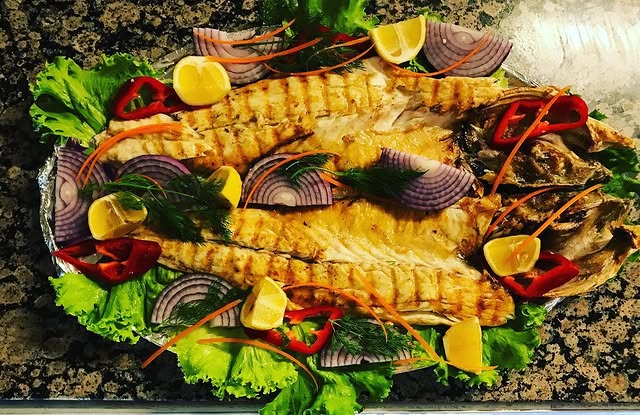
Ask what is good that day rather than deciding in advance. Seasonal fish changes through the year, and a restaurant working with the Bosphorus larder will have stronger and weaker moments for particular species. A whole fish to share is usually the most sociable option; smaller fish suit individual plates.
Step 4: Keep the end of the meal light
Finish with fruit and Turkish coffee rather than a heavy dessert. After meze, a hot starter and a fish course, this is usually what the table actually wants.
What Season Does to the Decision
Seasonality affects both dishes indirectly. Shrimp güveç is consistent year-round in character, which makes it a reliable choice in any month. Fish kokoreç depends on what the kitchen is working with that day, so its character can shift more.
The bigger seasonal question is the fish course itself. In cooler months, richer, oilier fish stand up well to a meal that began with a hot, savoury starter. In warmer months, when the meal leans lighter and more meze-driven, a smaller hot starter and a simply grilled fish feel more appropriate. If you are visiting in high summer, consider sharing one hot starter among more people.
Meze, Rakı and the Pace of the Meal
Ordering at a Bosphorus fish restaurant is a social exercise. Meze arrive in small plates and multiply; rakı is sipped slowly; the fish comes when it comes. If you order everything at once, the table fills up and the meal loses its shape.
A useful rule: order cold meze and your hot starter first, and hold the fish order until the meze are on the table. This gives you a chance to gauge how hungry everyone actually is, and it keeps the pacing in your hands.
Kireçburnu, Sarıyer and the Bosphorus Setting
Kireçburnu sits on the Sarıyer shore of the Bosphorus, north of the busier stretches of the city and close to the water. For visitors staying in central Istanbul, this is a deliberate trip rather than a casual stroll — which is part of the appeal. The area is quieter, the shoreline is walkable, and the meal tends to stretch longer than it would in a more rushed part of town.
If you are planning a day around the meal, an evening table makes more sense than a rushed lunch: you can arrive early, walk along the water, and then sit down without watching the clock.
Practical Notes Before You Go
- Reserve ahead. Especially for evening seatings and for tables that want the Bosphorus view, arranging your table in advance removes the main source of friction. Reservations can be arranged quickly via WhatsApp.
- Ask about the day's fish. The most useful question you can ask on arrival is what is good that day.
- Order in stages. Cold meze, one hot starter, then fish.
- Come hungry but not ravenous. This is a multi-course meal by design.
- Bring a group if you can. More people means more meze and a better chance to try both fish kokoreç and shrimp güveç without over-ordering.
Reserve your table for the freshest seafood and a tradition of taste since 1920. Contact us via WhatsApp for quick reservations with a Bosphorus view.
FAQ
Is fish kokoreç actually made from kokoreç?
No. The name refers to the shape and the skewered, grilled preparation. The filling is fish rather than offal, which is why it appears on seafood menus and suits guests who avoid red meat.
Can I order both fish kokoreç and shrimp güveç in the same meal?
Yes, particularly at a table of four or more. Order them as shared hot starters rather than as mains, and hold the fish course until they have been cleared. For two people, one hot starter is usually enough.
Which dish is better for someone who doesn't eat shellfish?
Fish kokoreç. Shrimp güveç is built around shrimp, so it is not suitable for anyone avoiding shellfish. Fish kokoreç is the safer choice for pescatarians who avoid shellfish specifically.
Is shrimp güveç spicy?
Generally it is mild to medium — the dominant flavours are tomato, pepper, garlic and butter rather than heat. Fish kokoreç tends to carry more spice and char. If heat is a concern, ask before ordering.
How many meze should we order per person?
A useful starting point is two cold meze per person for a table that intends to continue through a hot starter and a fish course. You can always add more; removing dishes from the table is harder.
Do we need a reservation?
For evening tables and for anyone hoping to sit with a Bosphorus view, reserving in advance is the sensible approach. Messaging via WhatsApp is the quickest way to arrange it.
What is the best time to visit for a first meal here?
An evening seating suits the full meze-and-fish sequence better than a quick lunch, and it allows time to walk the Kireçburnu shoreline beforehand. Allow at least two hours for the meal itself.
---
🐟 Historic Ali Baba Seafood Restaurant | 📍 Kireçburnu, Sarıyer, Istanbul | 🌐 alibababaliklokantasi.com | 📞 Reserve via WhatsApp
17.11.2026
Featured Publications
Notes on fish season, Bosphorus tables and traditional meze culture.